

A decision starts across several files
One proposal arrives as a PDF. Another comes in a spreadsheet. The product specification is in an image, while delivery terms appear in a document’s footer.
Before making a decision, someone needs to bring this information together, identify differences and find what is missing. This is the kind of work that makes the new generation of artificial intelligence worth watching.
On November 10, 2026, Google announced the availability of Gemini 4 Carbon, highlighting its analysis of documents containing tables, charts and images, as well as the creation of reports, presentations and spreadsheets. The announced access includes the API for paying developers and enterprise solutions. Google’s official announcement.
One possible application: comparing supplier proposals
Imagine a company receiving three quotes for the same order. Suppliers present information in different formats, and not all of them include the same terms.
An AI pilot could organize products and quantities, unit and total prices, shipping, lead times, payment terms and differences from the original order. It could also flag anything that still needs confirmation.
The most useful output would be a comparison that points each piece of information back to its source: file, page, line or cell. If a quote does not specify shipping costs, that field should say “not provided,” without an invented estimate.
This is a possible application to test, not a result already measured by Zeb Lab.
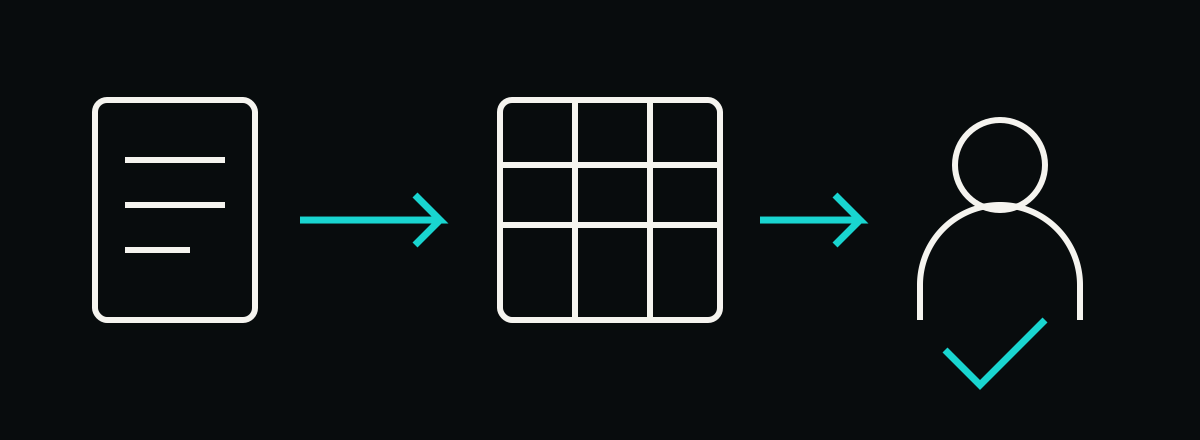
The most useful answer is not merely organized. It lets you check where each piece of information came from.
How to start without relying on blind trust
The best starting point is a recurring process with a limited scope and examples for which the correct answer is already known.
1. Define a verifiable task. Comparing commercial terms is more specific than simply “improving purchasing.”
2. Prepare the documents. Use authorized files, remove unnecessary data and check how the information will be processed and stored.
3. Define the output. A table with familiar fields makes checking easier. Gaps and discrepancies should remain visible.
4. Measure the whole job. Count not only processing time, but also the time spent reviewing and correcting the answer.
5. Keep the decision with the team. The tool prepares the analysis; approving a supplier or making a commitment remains a separate step.
What the announcement does not yet answer
The results and demonstrations presented by Google help explain the model, but do not show how it will perform with each company’s files, exceptions and criteria.
That is why it is worth testing the least organized material: poor scans, different names for the same item, contradictory terms and empty fields. This is where the team discovers when the answer helps and when it needs to intervene.
The opportunity lies in turning a technological capability into a useful process: defined inputs, traceable analysis, review and responsibility for the decision.
Which task in your company requires opening several files before reaching an answer? That could be a good starting point. Explore Zeb Lab’s approach to applied AI.